Tuesday, April 12, 2011

The Aesthetics of Glory


Now if we are children, then we are heirs—heirs of God and co-heirs with Christ, if indeed we share in his sufferings in order that we may also share in his glory. -Romans 8.17

I like the idea that glory is an inherently aesthetic word; that is glory is something that can be seen with our naked eyes. It’s often referred to in terms of “streams of light”, or “beauty” or “brightness”, which are all visual terms; light, beauty and brightness all being consumed through the eyes. I’m not sure we generally tend to link the beauty and attractiveness of glory with the experience of suffering. Paul does, and not just here in Romans. In this instance he directly links the beauty and brightness of glory with the suffering of the cross, hitting at the heart of a truth that at first may seem counter-intuitive to us.

I want to walk down the trail of one of the ways I understand their connection and see if this relationship might make more sense. At the heart of the event of the cross is the absolute articulation of the Father’s deep love for the world expressed through the Son’s self-gifting obedience to the Father. The Son gives himself to the Father who directs the Son to give himself completely to rebellious, proud, obstinate, and darkened humanity so as to experience in his body the violence inherent in the broken relationship between humanity and the Divine. In this act of obedience the Son experiences the brutality of humanity’s sin, but also mysteriously experiences as a human himself the separation from the Divine caused by sin as the Father allows this self-gifting act to operate as an act of atonement. This amazing drama of love and grace played out on the world stage for all humanity to see, for those of us who are Christians, serves to attract us to God. It’s this act that reveals most completely the extent of the Father’s love for the fallen world and the lengths to which the Father will go to bring humanity home into the strong embrace of His love. With the cross the Father declares to the world, “Don’t you ever doubt that I love you.”

This love revealed through the cross is what attracts me to God. It’s what I find beautiful. When I “see” the Son suffering on the cross, I’m seeing the glory, beauty, brightness of God. Michael Pritzl of The Violet Burning in his song “The Face of Beauty” articulates it well when he sings, “I’ve seen the face of beauty/His head is crowned with thorns/His face is ripped and torn/I’ve seen the King in all his strength”

So if God’s glory is linked to Christ’s suffering, what does that have to do with those of us who have staked our lives on what we believe to be the absolute importance of this event? In this simple sentence of Paul’s he suggests it has everything to do with us and the manner in which we make our choices, so as to also, through our lives, reveal the beauty, brightness and glory of God. If, as I believe, God’s glory is most clearly revealed through God’s self-gifting love, then when we are able to love our spouse, children, neighbors, co-workers, strangers, enemies, and fellow church goers with something like the self-gifting love the Father gives us, even when, and perhaps especially when that love involves suffering, distress or pain, we reveal a little of the beauty, brightness, and light of God. When we love in this way we shine God’s glory, thus helping people to see the beauty of God. In the end beauty must be seen to be appreciated. The Son is at the right hand of the Father. It is now the Holy Spirit working in and through us as we love those around us which makes this beauty/glory visible.

Thursday, June 3, 2010

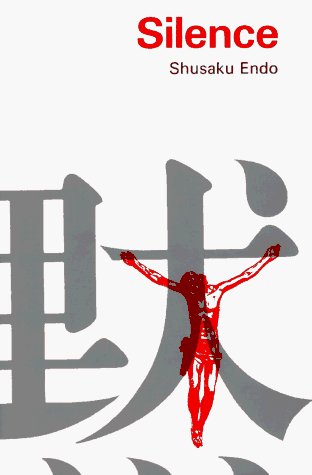
Echoes, Silence, Patience, and Grace


I recently finished reading Shusaku Endo’s historical novel Silence, and have found myself periodically haunted by it over the past several months as it continues to expand in my imagination. The story brings to the fore much of what interests me, and what I’d like to explore in this blog. Endo explores the manner in which culture acts as a sieve through which we sift our understanding of Jesus and the Divine. He explores pride and its insidious presence, even in acts of love, service and humility. He explores the relation of suffering to faith and their relation to a God who remains silent in the presence of both. It’s this last theme that interests me most, this relation of God’s silence with God’s presence/absence, especially in light of the Balthasar sermon for which this blog is named. This also is the central question Endo wrestles with in his novel, hence its title.

Through the book Endo is dramatically rendering the Christian gospel through and for Japanese eyes and ears, sifting the Western presentation and understanding of Christianity through the customs and workings of both Japanese culture at large and Japanese Christians. As a means to this end Endo’s central character, through whose eyes and letters the story is largely told, is a Portuguese Jesuit missionary priest, Rodrigues, who sees his mission as one of correctly ministering the sacraments of the Church to the existing and hidden Japanese Christians (Christianity and all missionary activity have been made illegal), and evangelizing those who were not part of the church, with a certain triumphant expectation at the core of both. Also on his agenda is locating his Jesuit missionary mentor who is rumored to have apostatized, that is turned his back on his faith.

Almost immediately upon arriving in Japan two of those to whom Rodriques has been ministering are put to death for their faith, tied to a stake in the ocean’s tide and killed by hypothermia over the course of several days, a slow agonizing death to be sure. He holds them in high esteem because they were willing to die for their faith, yet he seems to struggle with his own responsibility in the matter, given they were only discovered after he had arrived. This struggle grows as he is captured, along with other Christians to whom he ministered. He sees many of them tortured and killed while in confinement and tries to continue to minister to them, striving to remain a strong example of faith for them. This however continues to be a greater and greater struggle. He is finally confronted by his mentor who is alive and has in fact apostatized, and is serving the Japanese government in their attempts to counter Christianity. In the end he must choose whether to apostatize himself, however not in order to save his own life, but the lives of many other Christians who were being slowly tortured and killed in “The Pit”, an execution device where a person was hung upside down in a pit and a small incision made in their ear so that they slowly bled to death over the course of days, giving them time to recant their faith and save themselves. Thus at the novel’s climax you see the apparent trajectory of the entire story is one of Rodrigues moving closer and closer to apostatizing himself, with this tension of course felt by the reader, torn between Rodrigues’ commitment to his faith, and his love for his fellow Christians.

Throughout the novel there runs a parallel thread to Rodrigues’ narrative. Though told entirely from Rodrigues’ perspective, the character Kichijiro is meant to serve early on as a picture of everything that Rodrigues is not: weak, fearful, proud, and often emotionally unhinged. In the story Kichijiro apostatizes as often as the opportunity arises, often citing his weakness as a reason, and wondering why God had made him this way. It must be noted that Kichijiro is also the one who betrays Rodrigues to the authorities, raising obvious comparisons to Judas in the gospels, a point not lost on Rodrigues’ sense of righteousness. Kichijiro however recognized that his faith was not as “strong” as the other Christians who were willing to part with their lives for the faith; however he consistently returns to the faith, asking Rodrigues for confession and sacraments even after his repeated apostasy and betrayal in the novel. Over the course of the story as Rodrigues follows a trajectory toward apostasy, it becomes apparent that perhaps he is more like Kichijiro than he’d like to admit.

The obvious question to ask as one reads the novel, assuming one was a person of faith, would be whether he or she would end up apostatizing in a similar circumstance. The less obvious question, and the one ultimately posed by the novel is whether one SHOULD apostatize. The first question of course assumes one shouldn’t, but this assumption isn’t necessarily shared by Endo as the story reaches its climax. For the most part in the story the Christians are asked to simply step on a “Fumie” in order to show they are not Christians. A “Fumie” is simply a rendering in bronze or wood of Jesus, possibly on the cross, or possibly of Jesus and Mary. If the person steps on the Fumie they’re released, if not they move closer to torture and death. The novel begs the question of whether this simple act undermines or reveals faith. Simply put, is it more loving to apostatize so as to alleviate suffering or to steadfastly embody the faith that one teaches so as to be faithful and consistent? Endo’s answer to that question reveals the difference between the existential needs of Japanese and Western Christians, at least as he perceived them.

Endo believed that either could be valid expressions of faith. Rodrigues’ mentor, as he is urging him to step on the fumie and release his fellow Christians from their pain and suffering calls it “the most painful act of love you have ever performed.” Rodrigues even sees a vision of Christ, whose face has been very important to Rodrigues throughout the entire novel, asking him to trample on him, declaring that it was for this reason that he entered the world. I will not reveal here Rodrigues’ decision. You’ll have to read the novel yourself. It will suffice to say that his decision of course shapes the course of the rest of his life.

Without revealing the climax of the plot, I will say that Endo throughout the story, through various characters, but particularly through Rodrigues, asks why God is silent in the face of such suffering, even going so far as to ask whether God is even present at all. Why does God not intervene in the interest of justice or mercy? Why does God not make God’s presence known in the interest of comfort? Endo eventually concludes that God’s presence is revealed through the Christ imitating weakness of Christ followers. Endo sees in the story’s climax a vision of Christ not, “filled with majesty,” or “made beautiful by endurance of pain,” or “filled with the strength of a will that has resisted temptation,” but an image of a face, “sunken and utterly exhausted.” He concludes later in the book that even if God were silent that these weak, flawed, stunted, and failed expressions of faith would have spoken of God. These expressions of faith to Endo are participations in the humanity of his savior, and the dramatic re-rendering on the world stage of both the divine love which Christ rendered while human, and the human dependence on that love as we impiously, impatiently and imperfectly render that love to one another, which contrary to prevailing conventional wisdom and intuition, is really a magnificent encouragement.

Thursday, January 7, 2010

Into the Fray


Denver based group The Fray’s song “You Found Me” has recently been splashed across the pop culture grid, finding plentiful airtime on pop and rock radio stations, and used to promote television shows on the ABC network such as Lost, and Grey’s Anatomy. Of interest is the song’s popularity given its overtly theological disposition. The song opens with its narrator finding God, “on the corner of 1st and Amistad”, the translation of which from Spanish incidentally conveys the notion of friendship, “smoking his last cigarette” and asks God where God has been. The narrator describes an experience of suffering he has been through and then accuses God of never leaving any messages or sending any letters, though in the end he acknowledges being found, though still asking why God had taken so long. The song at its heart is attempting to work emotionally and experientially through the theological category of theodicy. Some, especially those hearing the song from the perspective of their own faith, may hear a song of accusation denouncing the love or goodness of God. However, another possible theological perspective sees the song as akin to many of the Psalms, a lament born of faith, complaining to God in faith and waiting expectantly for an answer. The song then could be seen as a contemporary expression of lament, expressing the same existential, though faith rooted angst voiced by many of the psalmists in the scriptures.

Isaac Slade, The Fray’s frontman and lyricist affirms this assertion that this song is born of a faith attempting to reconcile a trust in the unseen with his own lived experience, which on the surface appear at odds with one another, saying, “It demands so much of my faith to keep believing, keep hoping in the unseen. Sometimes the tunnel has a light at the end, but usually they just look black as night. This song is about that feeling, and the hope that I still have, buried deep in my chest.” To some this faith may be difficult to discern, and may even appear absent because of the confrontational manner in which it is expressed. However to Slade this confrontational tone is the intended representation of his faith. In a different interview he asserts, “"I kept getting these phone calls from home - tragedy after tragedy... If there is some kind of person in charge of this planet - are they sleeping? Smoking? Where are they? I just imagined running into God standing on a street corner like Bruce Springsteen, smoking a cigarette, and I'd have it out with him.” This is of course exactly the picture conveyed in the song, a person of faith having it out with God, and perhaps leaving the narrative, and thus the listener without resolution as the song fades. As troubling as this may seem, especially in light of what Old Testament Scholar Walter Brueggemann calls the “dominant American cultural ideology of success, continuity, and the avoidance of anything messy…”, this is not a unique expression of faith within the history Christianity and Judaism. These same types of expressions can be found in the Psalms.

Denise Dombroski Hopkins calls the Psalms that mirror this type of simultaneous expression of distress and faith, laments, picturing them as “complaining in faith.” She suggests that most laments share a similar structure, beginning with an often short, emotionally charged address to God often punctuated by questions such as “Why?” or “How long?”. They tend to move to the complaint itself as the psalmist describes their suffering and their enemies, and often accuses God of not caring about their circumstances. These expressions seem to often be married to petitions that follow their complaints, their motivations for making the complaint, and at times end with a confession of trust, or a vow of praise; however these concluding expressions of resolution are not universal to all psalm laments.

Hopkins’ psalm lament structure can be readily seen in what can be described as The Fray’s contemporary lament as Slade finds God on the street and asks God where God had been, and eventually “Why’d you have to wait?” In the subsequent verses Slade lays out his sufferings, revolving largely around, “losing her, the only one who's ever known/ Who I am, who I'm not and who I wanna to be” In the bridge Slade finally lays out his accusation, mainly that God has been absent for years, and that God never communicated with him in that time, concluding, “You got some kind of nerve taking all I want.” The song then ends not with a justification or a refutation of these accusations but simply with a resigned acknowledgement of being found, which in reality seems to be all Slade had wanted to begin with.
It must be granted here that the song does not precisely parallel the psalm lament format given the repeating chorus, a standard cultural convention of a typical pop-rock song. Additionally Slade never finds his way to actually making a petition, explaining his motivation, for example his innocence, though one may see that as implied, or praising God. One may be able to see glimmers of a confession of trust in his resigned acknowledgement of being found, but that acknowledgement is left with so much ambiguity that the state of Slade’s trust at the end of the song can be seen as up for debate. However given, according to Hopkins, that it is the first two portions, the address and the complaint that are common to all laments, and that the other portions show themselves to various degrees, this can truly be seen as a contemporary expression of a Hebrew lament. Perhaps this will reveal itself even more clearly through a comparison with a specific psalm lament.

A psalm which seems to closely parallel Slade’s expression of faith in crisis is Psalm 88. Like Slade the psalmist cries out to God from “the depths of the pit” and only receives silence in return. The psalm ends with the same lack of resolution with the psalmist writing, “You have caused friend and neighbor to shun me; my companions are in darkness.” In the end Slade seems to be expressing struggles very similar to those expressed by the psalmist, in an uncannily similar voice. In this light perhaps this isn’t a contemporary expression of a Hebrew lament after all, but a lament common to the experience of faith in The God of Abraham, Isaac and Jacob, and Peter, John and Paul expressed in a contemporary form
.

Friday, July 31, 2009

Remembrance, Nostalgia, and Reinterpretation


I recently heard a good sermon on John’s little postcard of a letter to the church of Ephesus in the book of Revelation. Among the main points of emphasis was the call to remembrance, tied to John’s recording of Jesus’ assertion that the Ephesian church had forsaken their first love, his plea that they remember the heights from which they had fallen, and his own call that they repent and return to an earlier set of practices or behaviors. After reflecting on the passage and the sermon I was struck by the dangerous road Jesus was calling the church in Ephesus, and by extension those of us who follow after them, to travel: the road of remembrance. The passage down this road is definitely necessary for those who would attempt to pursue God. Throughout the Bible you see God calling those who would follow to remember what God had done previously as a means of building their faith. You see God claiming the history of Abraham, Isaac and Jacob, the deliverance from Egypt, and the maintenance of grass and sparrows as personal works that we should be drawing on as a means of knowing about and relating to the self-gifting God who is revealed through those acts. The call to the church of Ephesus to remember however seems a bit more personal, which is where the danger lies.

They’re not being asked to directly remember God, but to remember their expressions and experiences of their faith in God, which seems to be a variation on this theme of remembrance. To put it another way, they’re not being asked to remember the works of God, but the manner in which they expressed their faith in those works, and what that felt like. Some may see a danger here in the distance between experiential or “subjective” remembrance and historical or “objective” remembrance. While the nature of that danger, and even whether it’s a danger at all, would be an interesting discussion, I see a different danger here, the tension between remembrance and nostalgia. Often when I hear this passage referenced in messages or songs or in conversation the call to return to “the things you did at first” becomes a longing for an idyllic earlier time in a person’s life, or in our collective history. Attached is the notion that if we could only return there in some way then we would be able to re-embrace our first love. I would suggest this is dangerous to our faith in several ways.

First, nostalgia tends to put God in the box replication; that is it assumes that God must do now in our time and context what God did in a previous time and context in the exact same manner God did it in the past. Because it idealizes the past, nostalgia tends to view what occurred there as the norm. Thus any thing which deviates from the normative past in our present context is judged to be wanting. If this were the nature of reality, it would be a great blow to the freedom of God. I would suggest that just because God is “the same, yesterday, today and tomorrow” doesn’t mean the manner in which God chooses to interact with the world is limited to how it’s been done in the past. To see evidence of this one only need look at the difference between the manner in which God interacted with Moses, and the manner in which God interacted with John himself.

Second, nostalgia tends to prioritize our experience of God ahead of our interactive relationship with God. In short, it prizes the sentimental above the unflinching messiness of reality. When we attempt to return to an idyllic past, what we often really want to return to is an experience of closeness with God which often accompanies new faith. We in essence want to re-experience the exhilaration or joy or whatever emotional state marked our conversion because it is to us evidence of God’s existence and embracing of us. Jeremy Begbie writes of this sentimentalist phenomenon that, “The sentimentalist loves and hates, grieves or pities not for the sake of the other but for the sake of enjoying love, hate, grief or pity.” Here nostalgia has a greater interest in a “Deep Warm Sweet Interior Glowing” than in any “other”, be that God or neighbor.

Third, nostalgia tends to prize spiritual immaturity. When we place an inordinate amount of esteem on our early expressions of faith we can tend to devalue and under emphasize our present expressions of faith. I would suggest that as faith matures it expresses itself differently. Philip Yancey in his book “Reaching for the Invisible God” suggests that faith is akin to a muscle that must be exercised in order for it to grow. As alluded to previously, conversion, especially in many Protestant and Evangelical circles, is often accompanied by an emotional surge which fades with time. In that surge, where the converted experiences a strong sense of the presence of God, the muscle of faith isn’t severely taxed. It’s when that sense of God’s presence seems distant or absent that faith is tested and exercised. When we prize the idyllic past we in a sense treasure an immature expression of our faith and devalue the new things the Spirit has done in our lives since then, and has in store for us.

So if Jesus is calling us to a sort of existential remembrance here, how do we read this postcard through those eyes, and not through the eyes of nostalgia? If we assume that nostalgia is a force that can be destructive to faith, then we must assume a non-nostalgic stance when interpreting the call to, “Repent and do the things you did at first.” This would mean that Jesus isn’t calling the church in Ephesus to a rote mimicry of their earlier practices, behaviors, and expressions of faith, but to return to a vital, first love-centric, renewed, and vigorous reinterpretation of their love and faith in their present context, remembering he “who holds the seven stars (the messengers of the churches) in his right hand and walks among the seven golden lamp stands (the seven churches mentioned in the Revelation)”, the one who is both the object of their faith and the template of self-gifting actions. I would suggest this is the road of remembrance and subsequently reinterpretation they’re being called on to travel.

Friday, May 1, 2009

Juno, Culture and Theology


It's been awhile since I posted, and as I'm graduating in 2 weeks, I'll have more time to post more, finally. In the mean time here is a paper I wrote for my Pop Culture and Christian formation class which fits the themes of this blog, so I figured I'd share it. It is a bit specific to the class, but I think works on its own to, even if its a bit dated. Enjoy.


The 2007 film Juno, directed by Jason Reitman, is an odd mix of genres, tones and emotions. It is a teen film, in that its focus is largely on high school students, yet it lacks the genre’s stereotypical raunch. It is a largely apolitical film that tonally achieves both pro-choice and pro-life moments. It is a comedy which is ultimately poignant and moving, perhaps even overtly and overly sweet, yet its sweetness grows out of the characters and story, and is not simply affixed for expediency. In addition to all of these peculiar juxtapositions the film somehow accomplishes the simultaneous engagement of sociological, ethical, and theological narratives surrounding teen pregnancy. What follows is a brief exploration of bits of those narratives, the manner in which they play out in the film, and how that might correspond to the lives of the adolescents who might engage this text.


Sociologically, and psychologically for that matter, Juno, the film’s protagonist, is a relatively typical high school student, though perhaps with a maturity and vocabulary beyond her years which can be overlooked for the sake of the willing suspension of disbelief. She has formed an identity along the fringes of popular culture, built around quirky, punk and alternative music, and slasher films.[1] Because of these chosen associations she experiences a degree of marginalization, which she in reality wears as a badge of honor, though as a result of her pregnancy she experiences an even further marginalization which she is less comfortable with, referring to herself as “the cautionary whale.”[2] In this tension the film recognizes the difference between the manner in which teens and people in general view themselves, the manner in which others view them, and the manner in which the individual either embraces or rejects other’s interpretations of him or her. Here Juno must grapple with what her pregnancy means to her identity. Does it irrevocably alter it, or can it be assimilated into the construct she’s already built? It’s into this social and psychological cauldron of ambiguity that the ethical and theological narratives are stirred, as Juno attempts to decide how to respond to her situation.


Juno’s first instinct upon learning she’s pregnant is to contact a local clinic, found in the Yellow Pages, which offers feminine reproductive services, asking how she might, “procure a hasty abortion.” She sets an appointment over the phone, but as she approaches the clinic there is a single protester outside, Su-Chin, who happens to be a classmate of Juno’s, with a sign shouting to nobody in particular, “All babies want to get borned.” This is the film’s first moment of inserting a theological and ethical narrative into Juno’s personal social and psychological narrative. As Juno walks past Su-Chin on her way to the clinic she is shouted after about her fetus’ development. She is told the fetus inside her has a beating heart, hair and fingernails. The last fact stops her in her tracks as she seems bemused. Upon entering the clinic she attempts light banter with the “emo” girl behind the counter who seems bored disinterested, addressing Juno in a cold, matter of fact tone. As Juno waits for her name to be called she can’t escape the sound of everyone either scratching, or tapping their fingernails, bringing to mind Su-Chin’s admonition. Juno eventually retreats from the clinic, running. As she sprints past Su-Chin, she shouts to Juno, “God appreciates your miracle!” Su-Chin is addressing Juno from her own theological narrative, which evidently sees a connection between God and some form of respect for life, and seems intended to be symbolic of the Christian pro-life position. Su-Chin’s narrative then disrupts Juno’s plans by disrupting Juno’s narrative.


In this theological confrontation, Juno’s latent theological narrative is never explicitly addressed, however the audience does witness her grappling with how these theological claims interact with the ethical decisions she is being forced to make, and how these correlate to her psychological and social contexts. This grappling however does not occur through the production of an easy moral, or even through a high moral tone, but is achieved through the film’s oddities and trivialities which in all reality end up replacing the high moral and correspondingly obvious theological tone with one which seems more akin to everyday experience, even though in Juno’s case this earthy tone is probably a bit wordier than most.[3] It is here in its banter, humor, and subsequent sweetness that the film’s theological engagement isn’t preached but is lived.


Ideally this is the manner in which the arts operate, according to Mattias Caro, inviting its audience, “to live and to examine the tensions life produces. It encourages us to remember there is more than mere political and moral posturing out there.”[4] In dramatically moving through these tensions between formation and ethics, theology and identity, and sociality and morality the film allows the issues to be holistically and incarnationally engaged in a manner which reveals their inherent inter-connectedness. Thus not only do the characters in the film end up engaging in Juno’s lived tensions and the disruption of her own theological narratives, but the film embodies these tensions in such a way that at the very least the audience emotionally engages these tensions as well.


This same pattern of engagement is at play as a second theological narrative is brought to the table, theodicy itself. As with all of the narratives engaged in the film theodicy is engaged with lightness and humor as Juno’s step-mother, Bren, asserts, “Someone’s going to get a special blessing from Jesus in this garbage dump of a situation.” This is theodicy viewed from above, through faith and with a spoonful of levity. Hers is a faith which evidently trusts that any situation can be redeemed as she attempts to make sense of why this difficulty is occurring to and in her family. It is of note that this faith is given to Juno’s step-mother’s character who only inhabits that role because of the dissolution of Juno’s parent’s marriage. Thus she embodies both the need to ask and the impulse to answer the question. But this question is not only asked by her, but in all actuality hangs over the entire movie as film critic D.G.D. Davidson observes, “This is a story of young people who have to find their way through the debris of institutions their elders have destroyed…”[5]


In their negotiation of this systematic brokenness the films characters all tend to attempt to reconstruct the heart of these institutions without resurrecting the institutions themselves, recognizing that sharing blood relations doesn’t necessitate family, but that the family an individual chooses isn’t necessarily dependent upon blood.[6] In this they are engaging theodicy and attempting to overcome it, though again perhaps not in an overtly theological manner. Thus Bren is revealed in some measure to have had a well placed faith as the adoption allows Vanessa, the adoptive mother, to realize her long pursuit of motherhood, and it allows Juno to complete her childhood.[7] Here the question of theodicy is not answered, but if the audience pauses they may be able to experience the mystery at the heart of the answer, which is perhaps all that can really be expected.


[1] Dan Morehead. “Film – Lions for Lambs, Charlie Wilson’s War, Juno.” 1 January 2008. Available at http://americasyoungtheologian.blogspot.com/2008/01/film-lions-for-lambs-charlie-wilsons.html. Internet; accessed 1 April 2009.
[2] Ibid.
[3] Gavin Richardson. “Juno – The Richardson Family Take.” 28 January 2008. Available at http://www.gavoweb.com/hit_the_back_button_to_mo/2008/01/juno-the-richar.html. Internet; accessed 1 April 2009.
[4] Mattias A. Caro. “The Artistic Dialogue of Juno.” 21 February 2008. Available at http://www.ajustsociety.org/press/forum.asp?nav=publications&cjsForumID=1091. Internet; accessed 1 April 2009.
[5] D.G.D. Davidson. “Movie Review – Juno.” 26 January 2008. Available at http://www.scificatholic.com/
2008/01/movie-review-juno.html. Internet; accessed 1 April 2009.
[6] Peter Quinn. “Juno.” 8 February 2008. Available at http://www.thinkingfaith.org/articles/
FILM_20080207_2.htm. Internet, accessed 1 April 2009.
[7] Ibid.

Friday, February 13, 2009

The Sound of Music


It’s been awhile since I’ve posted. I hope to become more regular soon, but I’m also working on my Master’s Thesis, which I’m finding to be very time, energy, and imagination consuming. I evidently find it difficult to write several things at once, at least in this instance. At any rate, I’ve had this rattling around in my head for a bit, so I figured I’d share it. At a Bible study going through the book of I Peter a month or two ago we were asked what we were grateful or thankful for in the context of the second chapter of the book. The first thing that popped into my head, though I have an overabundance for which to be thankful, was the ability to participate in music. To put this in context I’ll have to share a little history, so please bear with me.

One thing that has been constant in my life is a deep love for music. I can remember being 5 years old and really paying attention to what I’d hear on the radio, or what my Mom or Dad would play. I remember my mom really liking Barry Manilow and Billy Joel. I still really enjoy Joel’s music… Barry, not so much (sorry Mr. Manilow, it’s nothing personal). I remember taking note of songs on the radio, and have always had favorites. I also remember my dad taking me to see live classical and choral music. He even took me to the opera, which was largely spectacle to my pre-teen eyes. I still remember the record player I received for my 11th or 12th birthday, and the first album I received with it, Billy Joel’s Greatest Hits. The first album I ever actually bought myself was a-ha’s “Hunting High and Low”… and I’m not ashamed of that at all… no, really. Music was escape, therapy, and prayer. I would spend hours in my room just listening to new and old records.

I knew I wanted to be a part of making music because I just felt it so deeply. I figured the easiest and most natural outlet would be singing. I couldn’t play an instrument, and was too lazy to learn. I have a lazy streak, that I fight to this day, that drives me to try things as long as I can master them quickly and without looking awkward in the process. So learning piano, or guitar was out of the question because it just took too much work. I had tried to pick up clarinet in elementary school, and actually flunked out of it (which is really impossible to do). I remember at the elementary school Christmas concert, not really blowing, or knowing what to play because I just never practiced. Something similar happened with singing. To say it didn’t come naturally to me is an understatement; at least that’s what I’m told by those who had to listen to me sing. I sang with conviction and passion, but without actually hitting the correct notes, which unfortunately for me was one of the key elements of singing. So after several debacles in church where I really just embarrassed myself, though I didn’t know it at the time, I decided I had to learn something else music related. I had to be involved in making music somehow… which is when I decided to learn the drums.

I had rhythm, and there were no notes involved, it seemed like the perfect fit. I had seen other drummers play and knew how drums sets were set up, and decided to try to learn by playing with all my records and CD’s in my room, where I spent so much time listening to music. I would arrange pillows on the corner of my bed for toms, and boxes for high hats and snares and would play with CD’s from The Choir, U2, a-ha, R.E.M., Pink Floyd, Deliverance, Barren Cross, Altar Boys, Billy Joel, Tears for Fears, Mr. Mister, everything from swirly rock to pop to alt to metal. I learned single handed to play syncopated beats from Steve Hindalong of The Choir. When I got to college I purchased an old, small Slingerland jazz set for somewhere around $250 and proceeded to play rock music on it with friends and play very loudly. At any rate that’s when my journey as a musician started and being able to play has meant the world to me every step of the way.

Now I understand how self important and melodramatic much of this sounds, and for that I apologize, at least for the negative parts, but if I’m going to be honest with myself there is always a certain amount of self importance in writing something in a blog for public consumption anyway… but that’s a subject for another day. But part of the reason for sharing a bit of my history is to share the roots of my passion, the roots of what I’m experiencing when I hear music, and when I play music.

I’m thankful I have the opportunity to play drums because I get to experience first hand the beauty and transcendence I sense when I listen to music. There are times when I listen to music that I experience God. Often words are insufficient to describe what happens in those encounters. I’ve come to think that these moments may be the purest form of joy I’ve come to encounter. When I play I feel that joy even deeper at times because I get to participate in the music. I’m also thankful I get to play because I love being a part of creating an atmosphere where that encounter or experience may occur for someone else. Perhaps it’s someone else I’m playing with, or someone listening to what we’re playing, but for God to possibly use our encounter (my encounter with God) to possibly encounter another person humbles me when I truly contemplate it. I’m thankful I get to play because playing has become a language that God and I share. It has become a way that I can speak to God, offering my body, my motion, my mind, my heart in this one act. I’m not one to dance or even raise my hands during worship, but my body is free, in fact at its freest in service to God when I’m behind a drum set. I can be pretty self conscious in certain circles, but all of that leaves me when I play. In short playing music and even more specifically drums often becomes for me an ecstatic experience. So this is what is happening at my best moments when I play, so if you see me behaving strangely behind a drum set you now know at least a little of what might causing such odd behavior. It is behavior for which I am ultimately thankful to God for the opportunity to exhibit.
The image above is from: www.superstock.com/.../1491R-1078970

Tuesday, September 9, 2008

In Vogue


Below is a link to an interesting and disturbing New York Times article regarding a story and photo shoot in the most recent Vogue magazine. Generally I'm not interested in fashion, though I have been known to watch Project Runway with my wife (she makes me watch it, really). I believe it does fall under the rubrick of the arts in that it is a creative constructive endeavor. I'm not looking here to define the arts, just to recognize that fashion is a far flung planet in its solar system. At any rate you should probalby read the article before you read any further so you can be conversant with what will follow...


Done? Did the article strike YOU as disturbing. I'm interested in hearing what different people took from the article. I'm intrigued that the director of Vogue India, which I wouldn't have imagined existed not because of any economic status in India, but because Vogue seems to me to be inherently a Western Institution, suggests that those critical of the shoot should "lighten up" given fashion is never meant to be something serious. I can understand his perspective, but speaking for me I'm not troubled by the fashion itself, but by the uncritical and exploitive juxtoposition of such opulence with such abject poverty. It almost seems a bit like a little fashionista insider's joke. By not even identifying those who are modeling these items one almost gets the sense that they might as well be manequins on which these items are placed. In fact since the items are identified and the models are not there is the implicit notion that these items are portrayed as of greater value than the ones wearing them.


On the plus side the photography is well done and reveals a beauty in the models, which I believe was not necessarily the intention of it creators. Oddly their humanity is affirmed in spite of the apparent objectification and dehumanization inherent to the shoot. In the process it almost feels like the dehumanization laid upon these models by these juxtopositions is actually reflected back on to Vogue and the authors of the piece. Perhaps that's just me.


At any rate my question in this very short blurb is , quoting the peasant from Monty Python and the Holy Grail, a major source of deep thinking, whether there is a violence to humanity that is inherent in our system of advertising, and perhaps even inherent to our economics? I'm not going to attempt to answer that question here because that's a doozy. But I think this gives a unique voice to that question with a clarity that perhaps should be more common.
The photo above comes from the New York Times article.